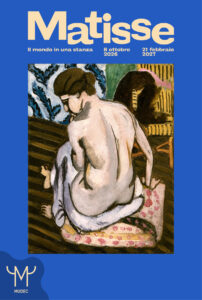
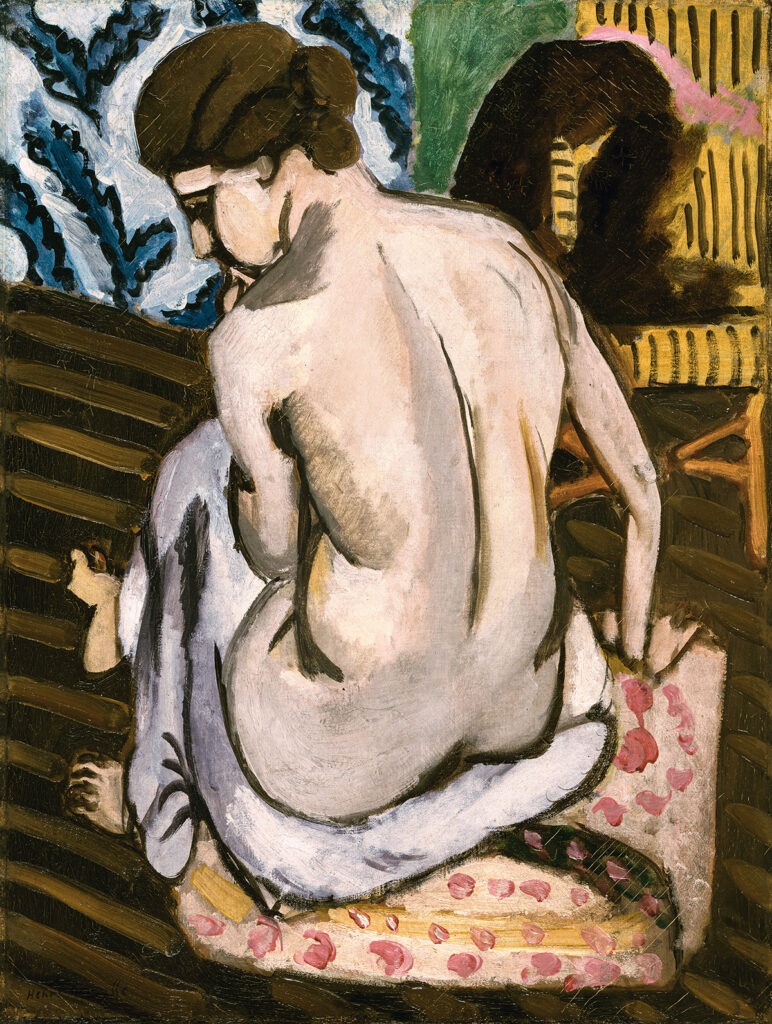
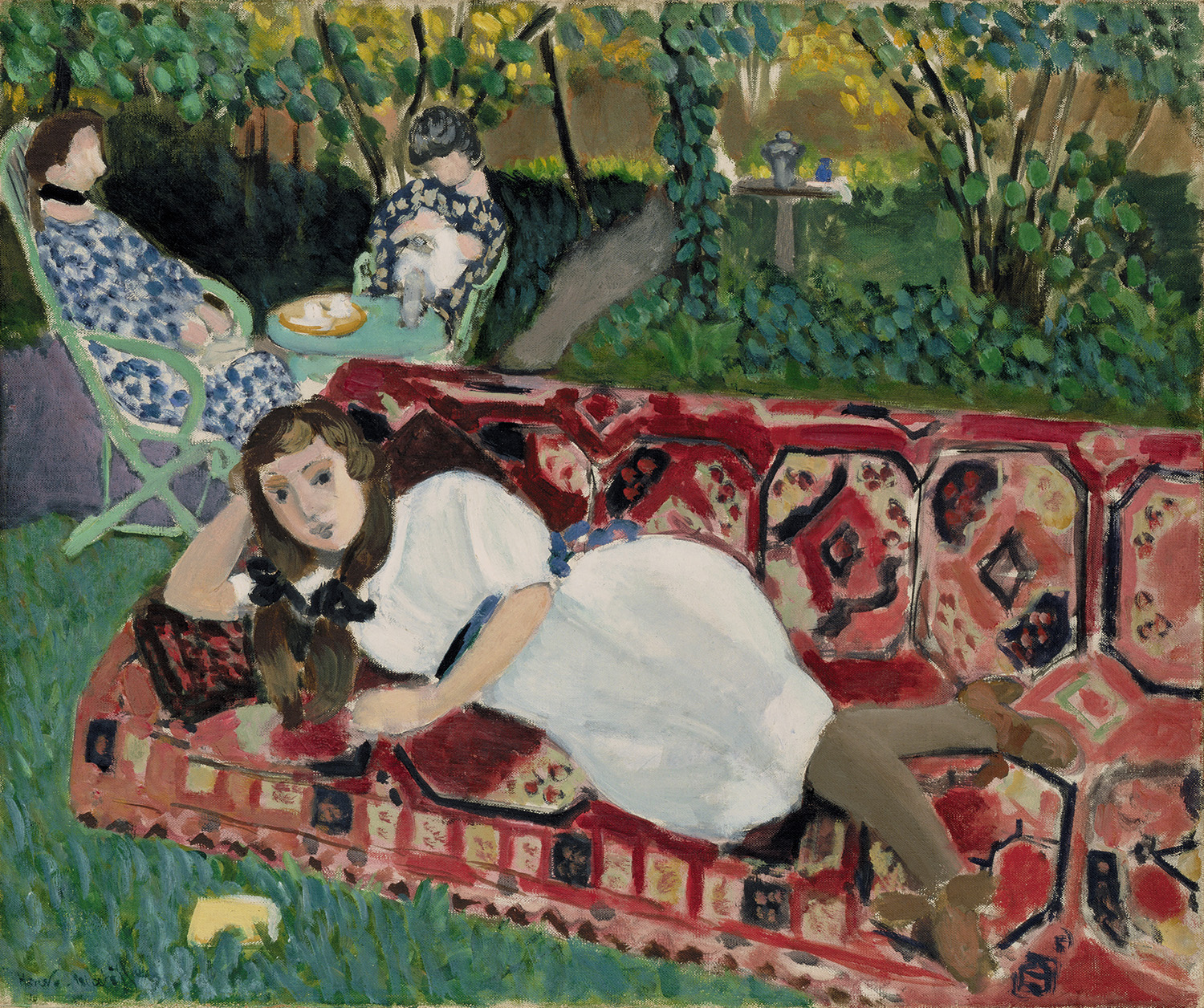
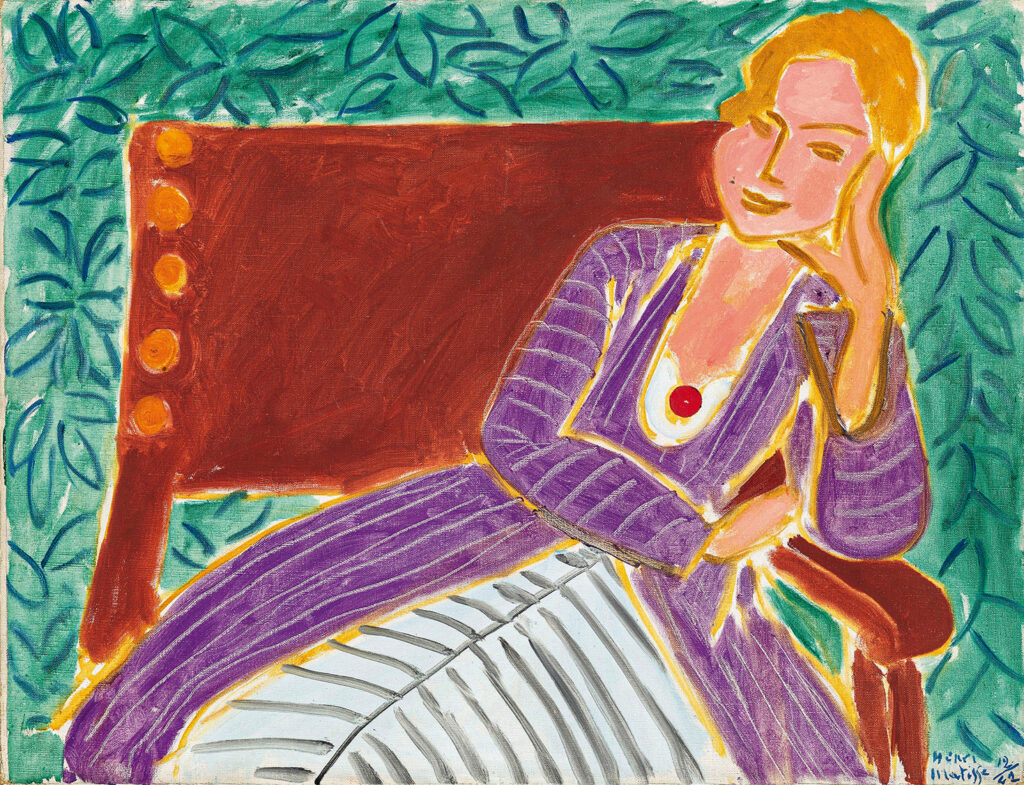
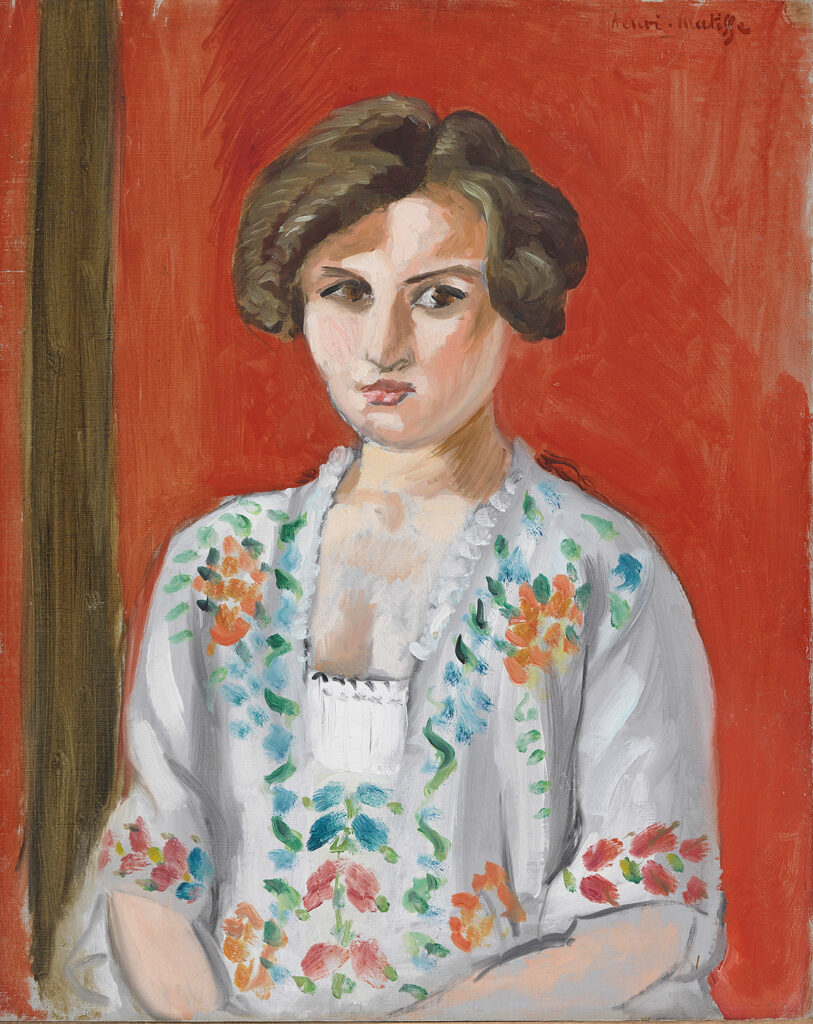
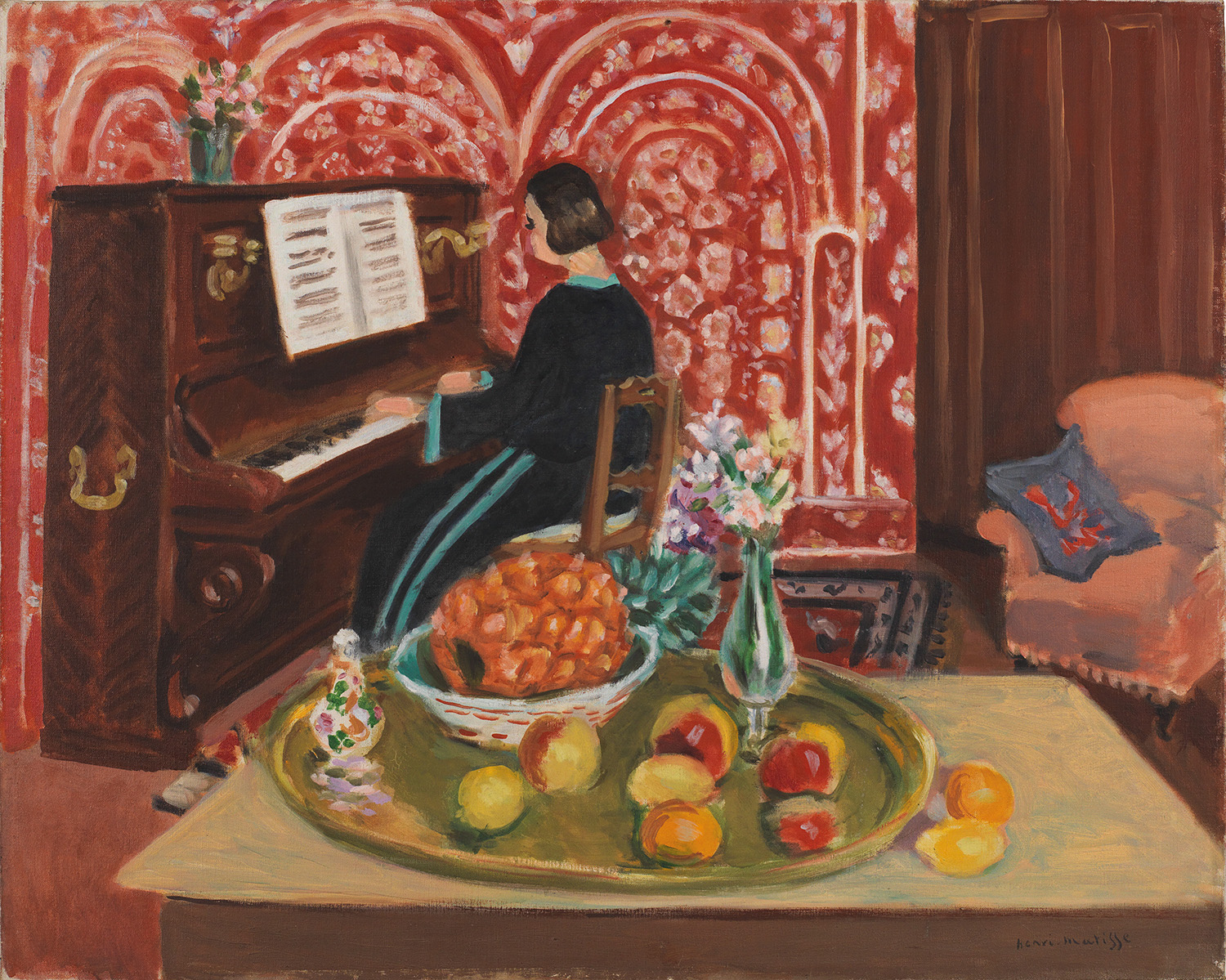
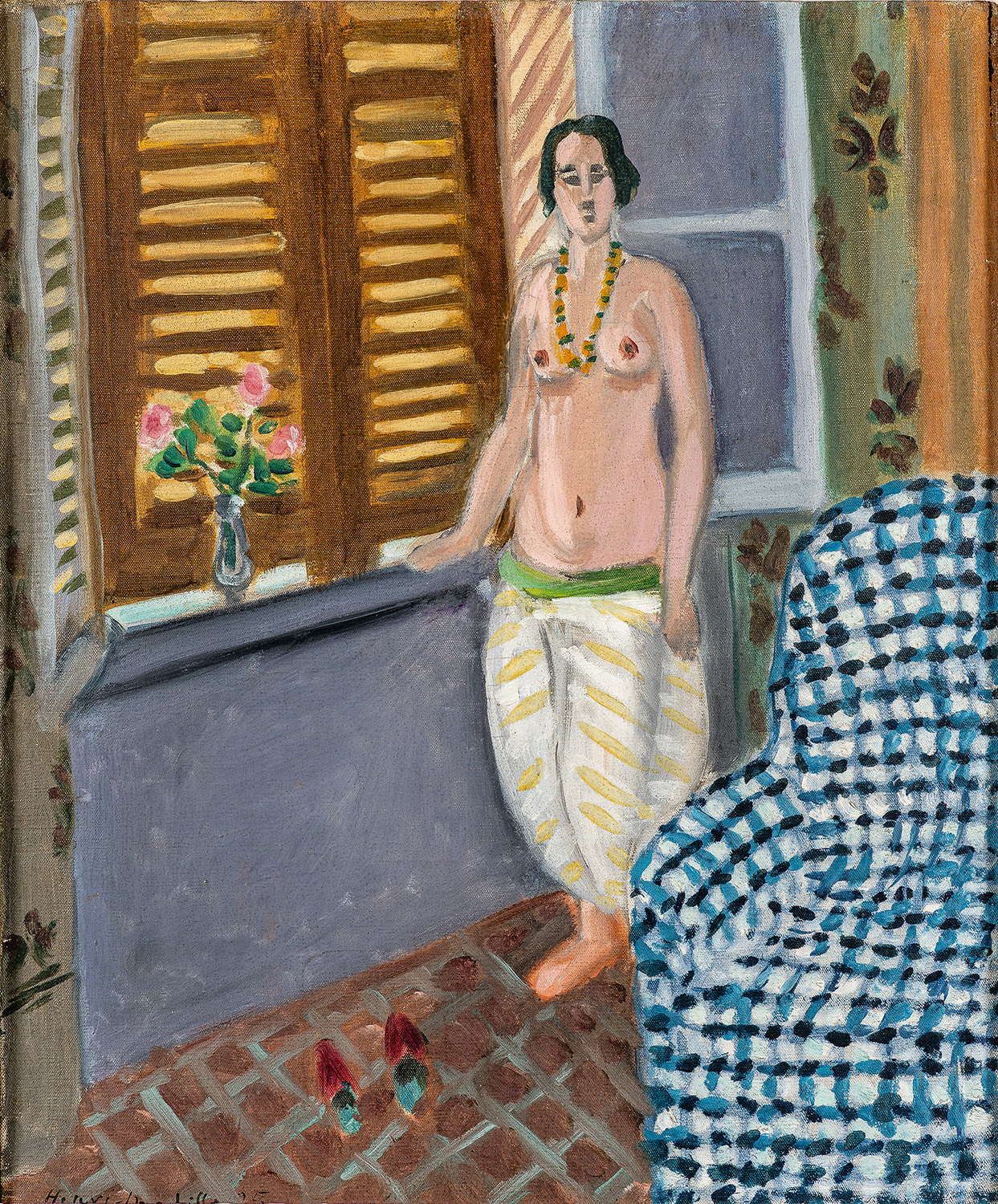
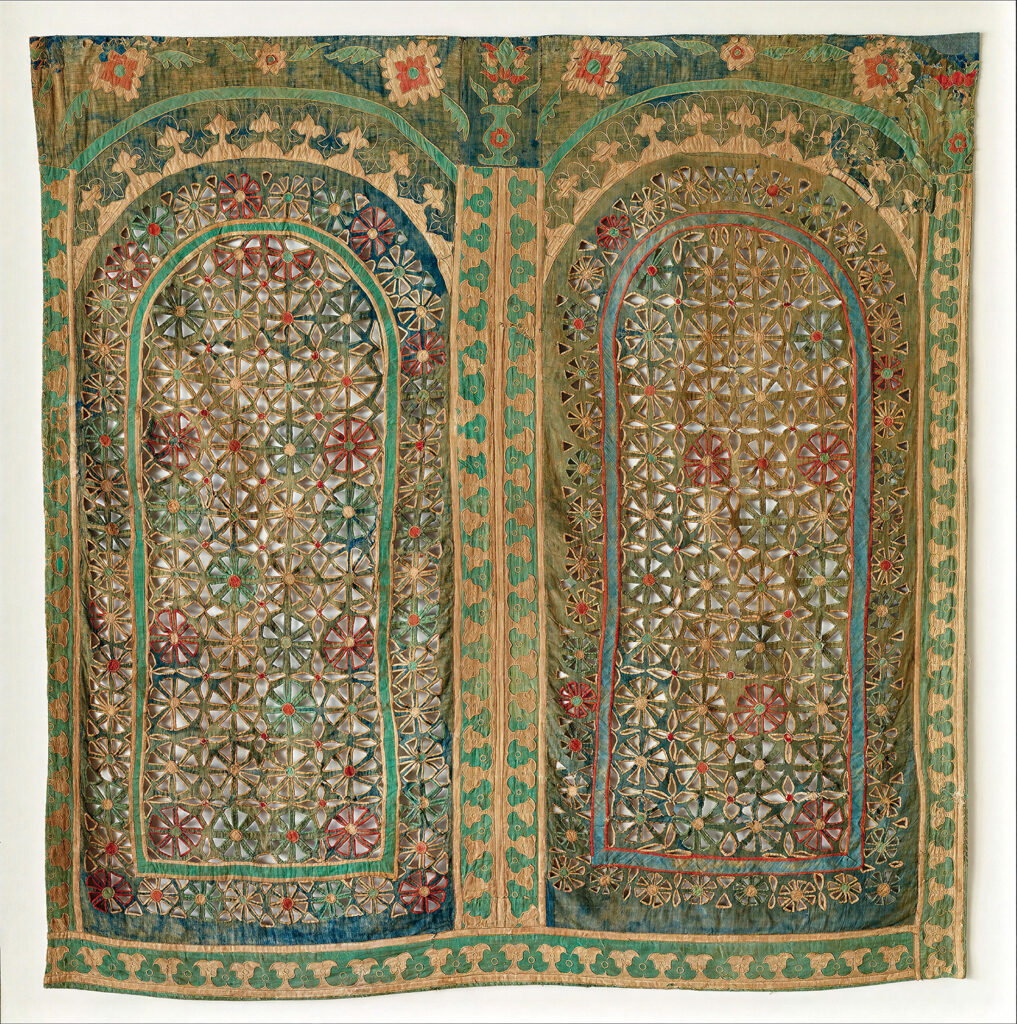
In Milan, MUDEC presents Matisse. The World in a Room an exhibition project that explores the deep connection between Henri Matisse (Le Cateau-Cambrésis, 1869 – Nice, 1954) and the cultures he encountered through his studies and travels beyond European borders. The exhibition investigates a central issue that has long remained in the background: the role that African, Islamic, Russian, Pacific, and Chinese art played in shaping Matisse’s language, helping to redefine the boundaries of Western modernism.
The exhibition, produced by 24 ORE Cultura – Gruppo Il Sole 24 ORE and promoted by the Municipality of Milan – Culture, is organized in collaboration with the Musée Matisse in Nice and is supported by Unipol as Main Sponsor, with Turisanda1924 (the exclusive travel brand of Alpitour World), Enel, and BPER Banca acting as Sponsors.
Curated by Ellen McBreen and Chiara Gatti, the exhibition layout is developed across eight thematic sections and brings together around 100 works—including paintings, works on paper, and sculptures—from major international institutions. Lenders include the Philadelphia Museum of Art, the Pierre and Tana Matisse Foundation Collection in New York, the MoMA, the Musée de l’Orangerie, the Musée Picasso, the Musée d’Orsay, the Musée du Quai Branly, the Bargello Museum in Florence, and MUDEC itself.
Alongside the artworks, a selection of objects and textiles—fundamental presences in the artist’s imagination—reflects the richness of Matisse’s dialogues with distant cultures and traditions. Coming from the Musée Matisse in Nice, the Museum of Civilizations (Museum of Rome), and other institutions, these artifacts allow visitors to deepen their understanding of the role of forms, decorative motifs, and materials in his research.
Particular attention is devoted to major decorative projects and artist’s books: from the monumental diptych Océanie to the celebrated plates of Jazz, from Mallarmé’s Poésies to Montherlant’s Pasiphaé, up to the preparatory drawings for the Rosary Chapel in Vence, the mature synthesis of Matisse’s artistic research. The itinerary is enriched by period photographs, including several previously unpublished shots taken by the artist himself in Morocco.
Matisse. The World in a Room offers an opportunity to critically reread concepts such as otherness, primitivism, and orientalism, fitting into the contemporary debate on the relationships between modern art, nationalism, and colonial culture. The exhibition stems from recent and partly unpublished research, inviting visitors to look at Matisse’s work from a broader perspective, attentive to the cultural exchanges that accompanied its evolution.
What distinguishes the project is the precision with which it reconstructs these encounters, avoiding reducing them to a generic “oriental” imaginary or a single area of influence. In fact, diverse suggestions coexist within Matisse’s visual universe: Islamic arabesques, the geometries of Romanian costumes, Yoruba Gelede masks, and medieval Russian icons.
Following these traces means going beyond the immediate elegance of his works to grasp their complexity, tensions, and ambiguities. It is precisely from the encounter between distant worlds that a visual language was born, capable of challenging conventions and leaving a deep mark on twentieth-century art.
The exhibition experience is rounded out by a dynamic program of guided tours and workshops designed to explore Matisse’s visual and emotional universe. Designed to engage visitors of all ages, these activities offer original insights into the master’s chromatic revolution, transforming the visit into a stimulating journey through sinuous forms and expressive freedom.
The exhibition explores the relationship between Henri Matisse and the cultures that helped shape his visual language, through a curatorial journey that brings together paintings, sculptures, works on paper, and a selection of artifacts and objects from different parts of the world. The guided tour takes visitors on a journey to discover the heart of the exhibition: Matisse’s studio as an open space for exploration, where African, Islamic, Russian, Chinese, and Pacific artistic traditions intertwine. This dialogue between artworks and objects offers a critical reinterpretation of the development of European modernism and its cultural references. The tour offers a nuanced interpretation of the artist’s work, highlighting the role of intercultural influences and their impact on his formal, chromatic, and compositional exploration, while opening new perspectives on the dialogue between cultures, languages, and identities.
The activity is designed for students of all levels of schools and for groups of adults of all ages (max. 25 people).
Cost of guided tour for schools*: €95 in Italian – €115 in a foreign language Cost of guided university tour / adults*: € 125 in Italian – € 145 in a foreign language *Does not include presale and commissions ( Two companions are admitted free of charge)
Dancing shapes, backgrounds that resemble seas, colors that joyfully travel beyond boundaries: for Henri Matisse, his studio was a veritable chamber of wonders, a magical place where he could welcome the memories and objects he had collected from around the world. This activity takes the little ones on a “Trail Hunt,” searching for warm hues, decorated fabrics, and hidden animals. In the workshop , each child will create “MyTravel Postcard,” receiving a simple outline (a vase, a wave, a dress, a little bird) and filling it with the marks and colors that most impressed them in the exhibition. A sensory experience to learn how objects and colors can reveal who we are and how we perceive the world.
Cost of tour + workshop*: €90 in Italian / €110 in a foreign language *Does not include presale and commissions (Two companions are admitted free of charge)
An embroidered dress, a decorated vase, a household object: in Matisse’s rooms, everyday objects are not mere ornaments, but bearers of journeys and distant cultures. Through a game of active exploration, this activity guides students to take a fresh look at material culture. Standing before the portraits on display, the children will receive an “Image Passport” and, divided into small groups, will have to complete four missions to track down clothing and ornaments from around the world and uncover their stories. In the workshop, creativity takes shape through the creation of “My Secret Outfit”: drawing inspiration from the famous Bulgarian Blouse, each student will decorate a cardboard jacket using stencils, sponges, and collage, incorporating personal symbols and patterns to share their family traditions, a cherished memory, or their curiosity about the world.
Cost of tour + workshop*: €150 in Italian / €170 in a foreign language *Does not include presale and commissions (Two companions are admitted free of charge)
How much can we understand about a person from a simple image? This activity guides the class in interpreting portraits in a dynamic way, to discover how each work of art can transform, conceal, or reveal identity at the intersection of reality and fiction. In the exhibition, divided into small groups and armed with special Portrait Cards, the students will closely analyze the gazes, postures, and colors of the subjects depicted. They will follow Matisse’s journey through the metamorphosis of the face: a journey in which the real figure loses its details to become a pure synthesis of lines and space. In the workshop, this reflection becomes poetic action. Drawing inspiration from the artist’s book *Jazz* and the papier découpé technique, students will deconstruct and reassemble the images of the portraits, experimenting with how cutting can give the subject a new form. Only at the end will writing come into play, with two specific prompts: “Others see me as…” and “But I am also…”. This text will create a dialogue between the gaze of others and a deeper identity. All the panels will ultimately be bound into a collective volume: a veritable atlas of faces in transformation, demonstrating that a single glance is never enough to define who we are.
Cost of tour + workshop*: €150 in Italian / €170 in a foreign language *Does not include presale and commissions (Two companions are admitted free of charge)
For Matisse, collage and visual synthesis were not merely techniques, but powerful tools for breaking down and reconstructing reality. The exhibition explores works in which European patterns, Kuba textiles, and Oceanic traditions coexist, demonstrating how one of the masters of the great avant-garde movements brought distant worlds into dialogue through a perfect balance of forms and negative space. In the workshop, students will use this geometric and minimalist language to map their own everyday cultural landscapes, made up of music (classical, rap, trap, global pop, pop punk), Korean TV series, and digital passions. Drawing on Matisse’s principle of synthesis (a strict limitation of flat shapes and colors), the students will cut out and assemble their own identities on paper, accompanied by a short textual manifesto. The result will be a collective artist’s book titled IL MIO JAZZ*, a pluralistic anthology that interprets diversity as a constellation of global influences.
Cost of visit + workshop*: €150 in Italian / €170 in a foreign language *Does not include presale and commissions (Two companions are admitted free of charge)
MATISSE AND THE CONSTRUCTION OF THE GLOBAL IMAGINARY
Class on Display (90′)
A field trip designed for college students. The tour explores Matisse’s body of work, from the odalisques of the 1920s to his Polynesian-inspired pieces, analyzing it as a perfect case study of the interplay between modernism, Orientalism, and colonial dynamics. The first part closely examines the transition and decontextualization of traditional models from the artist’s studio to European avant-garde painting. The second part takes the form of a guided discussion with instructors, focusing on the ethics of exhibition and addressing crucial issues in contemporary museology and the sociology of media: the concepts of cultural appropriation and hybridization, placing early 20th-century collecting in dialogue with the current global debate on the decolonization of art collections.
Cost of lesson on exhibition*: €145 in Italian / €165 in a foreign language *Does not include presale and commissions (Two companions are admitted free of charge)
An afternoon for young and old alike, in which Matisse’s studio is revealed as a fabulous three-dimensional map. In the first part of the activity, each family will receive a special “object card”: the goal will be to find the artwork on display where that detail is hidden, reconstructing the invisible connections that link the artist’s studio to different corners of the world. In the workshop, families will collaborate to create their own “Screen of Wonders”: made of cardstock with three panels, families will play with the chromatic contrasts typical of papiers découpés, superimposing Matisse’s signature motifs onto textures and iconic objects from their own homes (the living room layout, a pet, a rug and its geometric pattern, a family memento). A small three-dimensional space to take home with them.
Cost of guided tour + workshop*: €22 per adult* + €20 per child *Does not include advance booking fees and commissions
MATISSE: AN OPEN ROOM. Living on the Edge of the World
Saturday, 2:45 p.m. Guided tour + design workshop (90 minutes)
There is a moment, when encountering art, when the noise of the world fades away to make room for something more. Henri Matisse’s studio becomes that place of respite, an immersion in the work of art where color and form become thresholds to cross in order to explore one’s own identity—an identity that has always been built from fragments, nuances, and transformations. In the workshop, by experimenting with drawing and the papier découpé technique, each participant will create a personal screen: an intimate space, a small refuge from which memories and free-form shapes emerge. On the surface of the screen, what we reveal and what we hold within ourselves coexist in perfect balance. Only at the end will the works be brought together, giving rise to an open, collective panorama.
Cost of guided tour + workshop*: €24 per adult* *Does not include advance booking fees and commissions
An evening tour that transforms the rooms painted by Matisse into a mirror reflecting how we live in the contemporary world. The artist’s canvases are like open spaces, much like our homes and contemporary cities, where identity is built day by day through encounters, exchanges, and layers of experience. Guided by historians and art historians, you’ll be drawn into a direct dialogue with key works, connecting Matisse’s painting to modern dynamics: the need to protect cherished memories from the fast pace of life, the intermingling of cultures, foods, and languages that we experience every day right on our doorsteps in our city neighborhoods, and an openness toward the future. A journey to discover that curiosity and respect for other cultures are the only resources we need to navigate change without fear.
Cost of themed guided tour*: €24 per adult* *Does not include advance booking fees and commissions
MATISSE: THE INNER ROOM Exploring One’s Own Boundaries
Guided Tour + Workshop (120’)
There is no such thing as a team without a shared space: collaboration is built on boundaries, rather than on similarities. An experiential team-building activity inspired by the world of Henri Matisse, designed to explore communication, awareness, and group dynamics through art. Drawing on odalisques, studio interiors, and inspiration from travels to Morocco and Tahiti, the guided tour invites participants to interpret the exhibition as a space for connection: an environment where individual identities and work systems meet, influence one another, and are redefined. The concept of a “room” becomes a corporate metaphor for boundaries, roles, and collaboration. During the workshop, each participant builds their own “inner screen”: a visual tool representing personal skills and resources. Through drawing and collage, participants explore what they reveal to the team and what lies hidden behind the screen, fostering awareness, trust, and the ability to share. The activity concludes with a guided discussion, during which the screens come together to form a collective vision of the group: an exercise in listening and integrating differences, designed to strengthen cohesion and collaboration, starting from an intimate and personal perspective.
Tickets
All ticket types include an audio guide
SINGLE ADULT TICKET €16.00
REDUCED SINGLE ADMISSION €14.00 Visitors aged 6 to 26, seniors over 65, people with disabilities (Law 104), teachers, military personnel, off-duty law enforcement officers, and companions employed by the City of Milan
REDUCED ADMISSION FOR COOP LOMBARDIA €14.00 Coop Lombardia members with a membership card, Coop Lombardia employees with a company ID badge
SPECIAL REDUCED SINGLE-ENTRY TICKET €12.00 Employees of the City of Milan with a named badge (only one accompanying guest, if any), National Civil Service volunteers or those working for the City of Milan with a valid ID card, journalists with an ODG press card bearing the current year’s stamp who are not accredited (no accreditation on Saturdays, Sundays, or holidays). Accompanying guests of employees of the Il Sole 24 ORE Group with a name badge (maximum of 3).
TUESDAY UNIVERSITY STUDENT ADMISSION €10.00 University students with a valid ID card, regardless of age, every Tuesday (except holidays)
FREE ADMISSION Minors under 6 years of age, Italian tourist guides with a license card (no queue skipping), journalists with an ODG card with prior accreditation from the Press Office (write at least 24 hours in advance to: elettra.occhini@ilsole24ore.com specifying the newspaper and the day of the visit. It is not accredited on weekends and holidays), 1 companion for people with disabilities who present needs and regular documentation, holders of Mudec Membership Cards, holders of Deloitte Mudec Cards, ICOM Cards, CINAM Cards, Employees of the Il Sole 24 ORE Group with nominal badges (3 companions in tow at € 12.00)
FAMILY SPECIAL ( 2 to 5 people) Adult (1 or 2 adults) €14.00 First and second child (ages 6 to 13) €10.00 First and second child (ages 14 to 26) €14.00 Free admission for the third child (ages 6 to 13)
FRECCIAROSSA REDUCED SINGLE-TRIP TICKET €8.00 50% discount for holders of Frecce tickets (Frecciarossa, Frecciargento, Frecciabianca)—in digital or paper format—with Milan as the destination and a travel date falling within the two (2) days prior to the date of entry to the Exhibition. (If you fail to present your ticket, you will be required to pay the difference between the discounted price and the full-price ticket.) Choosing to take the train also means choosing sustainability, helping to reduce emissions and protect the planet: a small gesture with great significance.
ATM REDUCED SINGLE-ENTRY TICKET €8.00 50% discount for holders of an ATM card or Carta Club with a valid annual membership and proof of purchase (If you fail to present your valid travel pass, you will be required to pay the difference between the reduced and full-price ticket), ATM employees with a company ID badge. (If you fail to present your valid travel pass, you will be required to pay the difference between the reduced and full-price ticket).
OPEN ADMISSION (Valid through January 24, 2027 and from 3 hours after the time of purchase) € 17.00 + 2.00 Whole € 12.00 + 2.00 Reduced employees Il Sole 24 ORE Group Valid from the day following purchase and grants direct access to the reserved tickets desk.
ADULT GROUPS / UNIVERSITY STUDENTS €14.00 Groups of at least 10 people (maximum 25) Free admission for 1 chaperone per group
SCHOOLS €6.00 Groups of students from all levels of education; advance tickets not available Free admission for 2 chaperones per school group Microphone rentals will be available for students starting in the third year of middle school
CHILDREN €4.00 Groups of preschool students—advance ticket sales not available Free admission for 2 chaperones per school group (no microphones allowed)
ADVANCE TICKET SALES: €2.00 Individual visitors and groups + fees €1.00 Schools + fees To ensure that visits are scheduled smoothly, advance booking with prepayment is required for school groups and other groups, whether or not a guide is requested. It is also required for groups of 7 or more people with a guide.
AUDIO GUIDES Required and subject to a fee for adult groups and school groups with a guide (7th grade and up): €30.00; Groups with an external guide €20.00 Schools with an external guide €20.00 Groups with an internal guide €15.00 Schools with an internal guide €1.00 per person (groups of up to 14 people) We recommend booking in advance online at www.vivaticket.com or by calling the info line at 02.54917 Tickets may be purchased at the box office on the day of your visit, subject to availability.